What the CVE-2026-111497 Brotli flaw is
Brotli shrinks web content so pages and data travel faster. Your host, operating system, container image or PHP stack supplies it, which explains why you will never see it listed among your plugins. Google published the CVE on 22nd October 2026, one day after the Brotli project released fixed versions, and the issue carries a CVSS v4.0 score of 9.2 out of 10.
Affected upstream versions run from 1.0.3 to 1.2.0. The first fixed releases are 1.0.10, 1.1.1 and 1.2.1, according to the Debian security tracker. A malicious compressed stream makes the decoder write outside its reserved memory, and the outcome ranges from a crash or leaked memory to remote code execution.
Because the library sits below WordPress, the version shown in Tools > Site Health tells you nothing about this flaw. Your WordPress version and your Brotli patch status are two separate questions.
How pingbacks give attackers a route to Brotli
WordPress can fetch data from other websites, and the server's HTTP client may use Brotli to decode the reply. The public proof of concept abuses pingbacks, the feature that lets one site notify another that it has linked to a post. An unauthenticated request calls pingback.ping at xmlrpc.php with a source URL the attacker controls. WordPress visits that URL to confirm the link, the attacker's server returns a booby-trapped Brotli response, and the vulnerable decoder corrupts memory. When the payload matches the server, code runs with the permissions of the site's PHP process.
Wordfence reproduced the attack in an isolated lab running WordPress 7.1.3 on Debian 13.7 with Apache 2.4.69 and PHP 8.3.36. After updating only Brotli to Debian's fixed package, the same sequence stopped executing code. Against PHP 8.3.35 the payload failed to run code, although it crashed PHP in one vulnerable setup. The public exploit therefore depends on the exact server build, yet Wordfence warns that reuse against sites sharing a common server image remains plausible.
On exploitation, keep three facts apart. CISA added the CVE to its known exploited catalogue on 27th October 2026 with a due date of 10th November 2026, but the entry names no application or attack route. Wordfence found no public report of a successful production compromise through WordPress up to 2nd November 2026. No public case is not the same as no attacks, so treat the update as urgent.
Which WordPress sites are exposed
The demonstrated WordPress route needs every one of the following conditions at once. Missing one blocks this particular route, but leaves the library itself unpatched.
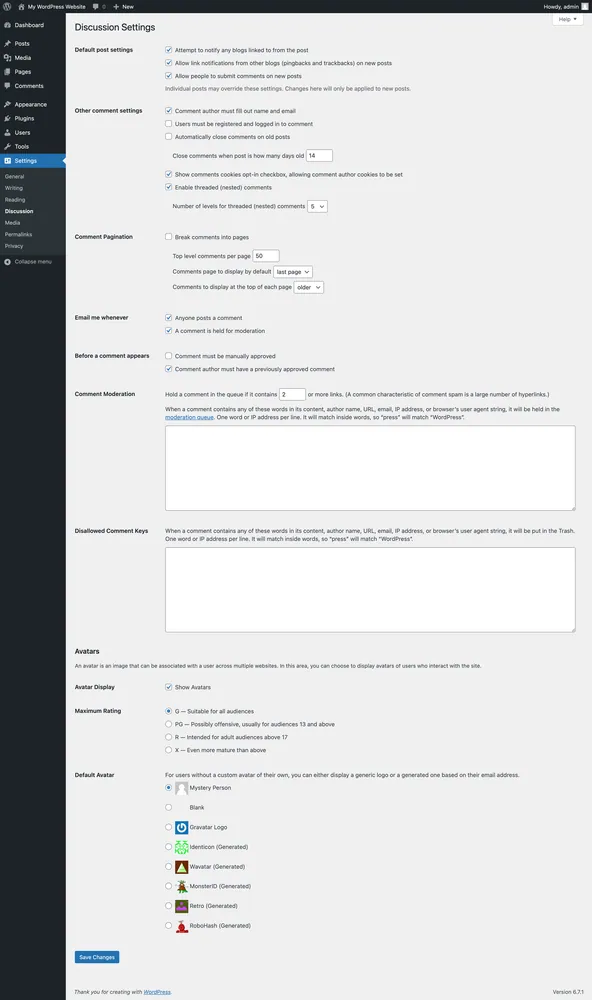
Turning off pingbacks under Settings > Discussion changes the default for future posts only, so existing posts keep their earlier setting. Plugins, themes and other software on the same server can also hand attacker-controlled compressed data to Brotli, which is why the library update matters even on sites where pingbacks are closed.
- An affected Brotli decoder is used by the HTTP client serving your site.
- xmlrpc.php is reachable and the pingback.ping method is registered.
- At least one post still accepts pings.
- The server is allowed to make outbound requests to other websites.
What to do now, by hosting type
Your next step depends on who controls the server. Server-level fixes follow the same pattern as the recent PHP security update: the work happens outside the WordPress dashboard, and someone has to confirm it reached the process that actually runs your site.
- Managed hosting: ask your provider whether the process serving your WordPress site uses a Brotli decoder patched for CVE-2026-111497, and whether every affected service was restarted or redeployed after the update.
- Self-managed servers: install the security update from your operating-system or platform vendor, compare the complete package revision, then restart Apache, PHP-FPM or any other process that loaded the old library.
- Containers: rebuild and redeploy from an updated base image. Restarting an existing container leaves the vulnerable files inside it.
- CloudLinux and similar platforms: read the vendor advisory closely, because separate system, web-server and bundled PHP copies of Brotli exist and updating one leaves the others untouched.
- Agencies: review production, staging and legacy environments individually rather than trusting one package check to cover every PHP pool or image.
Checking the CVE-2026-111497 patch properly
Linux vendors backport fixes without changing the main version number, so the first three digits mislead. Debian 13 fixed the flaw in libbrotli1 1.1.0-2+deb13u1, while 1.1.0-2 remains vulnerable. On Debian 12 the fixed revision is 1.0.9-2+deb12u1. Ask your host for the full revision string and the vendor notice it matches.
A patched package on disk only protects you once running services load it. Proof of the fix therefore comes from two pieces of evidence together: the full package revision, and confirmation that the relevant services restarted or redeployed afterwards. Your site loading normally after maintenance is an observation, not proof that the vulnerable copy has gone.
Restricting pingbacks as a stopgap
While you wait for your host, restricting pingback.ping closes the demonstrated WordPress route. Two common settings fall short here. Wordfence's Disable XML-RPC authentication option leaves unauthenticated pingbacks working, and the similarly named xmlrpc_enabled filter likewise affects only methods that require a login.
Blocking pingbacks can disrupt legitimate integrations that rely on XML-RPC, so test anything that connects to your site afterwards. Remember the limit too: the library stays vulnerable until the vendor update is installed and services reload it.
Logs, warning signs and what they prove
Keep web-server, PHP, firewall and outbound-network logs from before public disclosure through to the moment each environment was patched and restarted. If patching was delayed, look for unexpected XML-RPC pingback requests, unusual outbound connections, and PHP or web-server crashes and restarts.
None of those signs proves a compromise on its own, and a clean log does not prove the site was untouched. Where an investigation finds real evidence, contain the affected system first, then rotate database credentials, API keys, WordPress salts and other secrets the site can reach. Rotation helps after an incident assessment; it never replaces the patch.
If server updates and log reviews keep landing on your desk, compare what WordPress maintenance services include before the next server-level flaw arrives.
Sources
CVE-2026-111497 WordPress Brotli FAQs
Will updating WordPress fix CVE-2026-111497?
No. The flaw is in the Brotli library on the server, not in WordPress core, a plugin or a theme. Your host or server administrator must install the vendor update and restart or redeploy the affected services.
Which Brotli versions are affected and fixed?
Upstream Brotli 1.0.3 to 1.2.0 is affected, with fixes in 1.0.10, 1.1.1 and 1.2.1. Vendors backport fixes, so Debian 13 is fixed in 1.1.0-2+deb13u1 and Debian 12 in 1.0.9-2+deb12u1.
Has anyone been hacked through WordPress with this flaw?
Wordfence found no public report of a successful production compromise through WordPress up to 2nd November 2026. CISA lists the CVE as known exploited without naming the application or route, so patch urgently regardless.
Does turning off pingbacks in Settings > Discussion protect my site?
Only partly. That setting changes the default for future posts, and existing posts keep their earlier choice. Blocking pingbacks removes the demonstrated route but leaves the vulnerable library in place.
Why does my host need to restart services after the update?
Running processes keep the old library loaded in memory until they restart. Apache, PHP-FPM and similar services need a restart, and containers need rebuilding from an updated base image.